
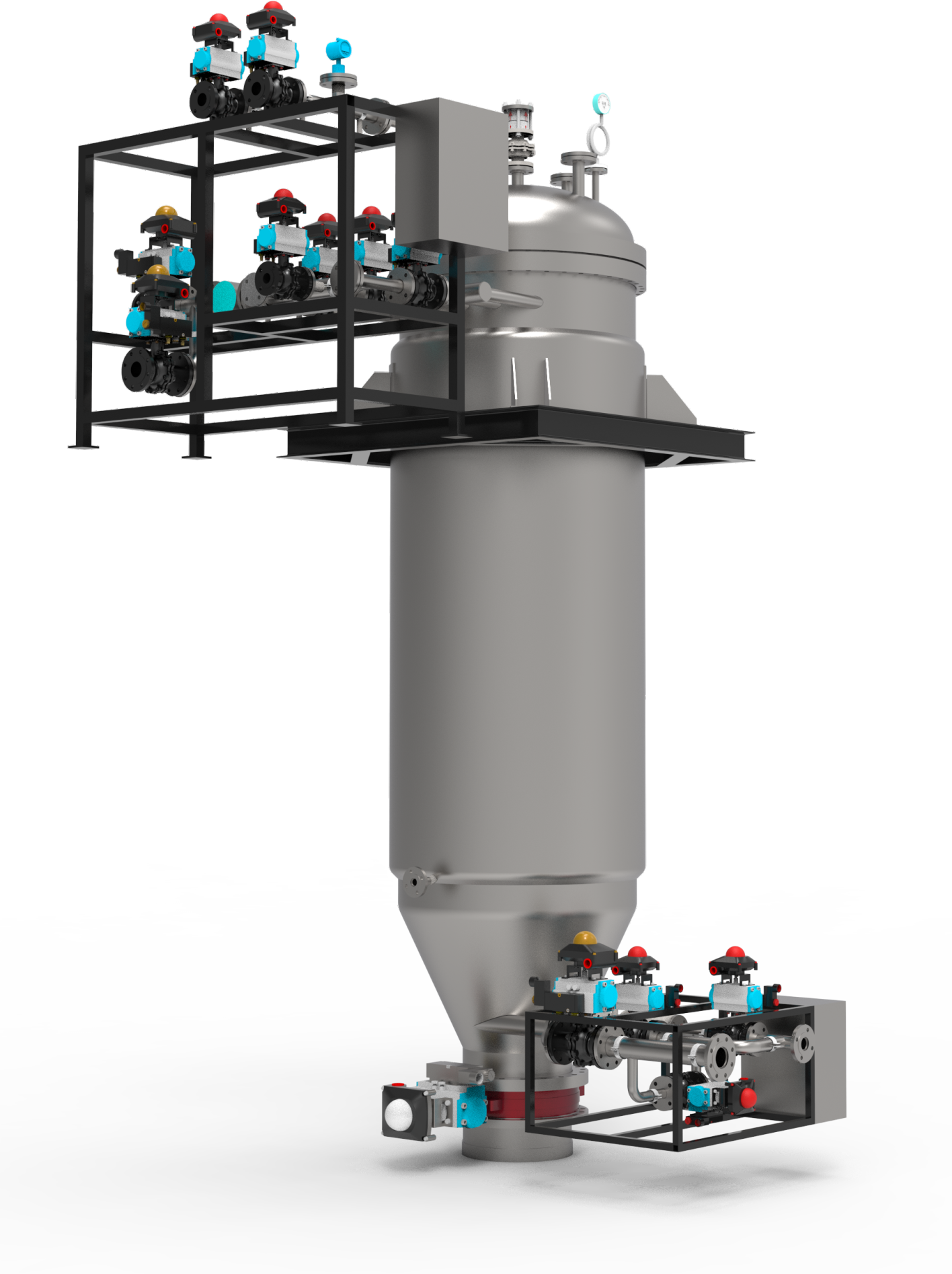
Series · TFB

Continuous Thickening System

Dual collection circuits enable sequenced regeneration and continuous slurry discharge without stopping production.

Discuss this system →Process principle →
TFB Continuous Thickening System

Series

Continuous Thickening System

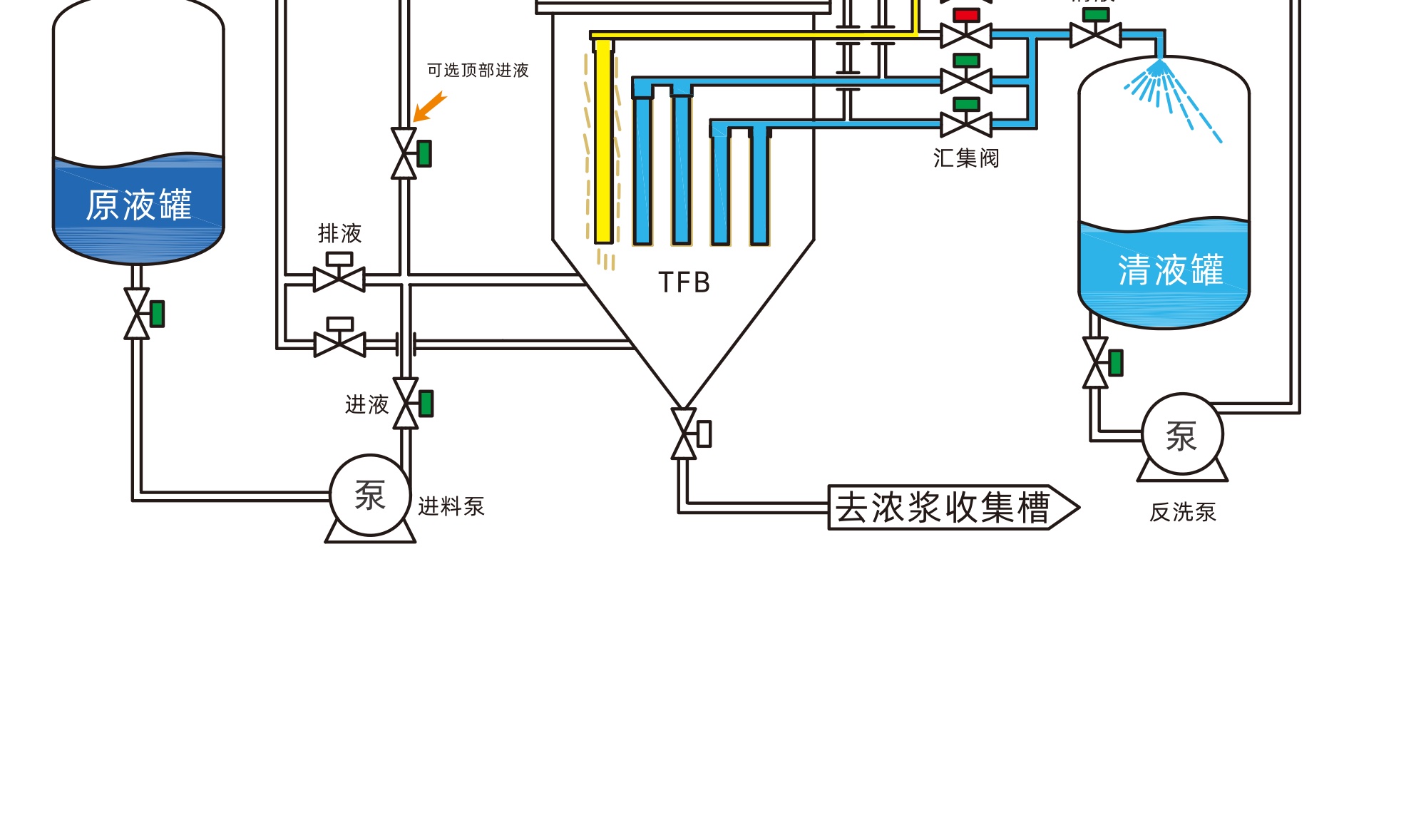
TFB uses dual filtrate headers: one transfers clarified liquid while the other regenerates or pre-coats selected elements. Concentrated slurry is discharged online for true single-vessel continuous duty.

Series
TFB
Operating mode
Continuous duty · In-line regeneration
Delivery format
Vessel / packaged unit / skid

TFB

Technical features

  1. 01Single-vessel continuous filtration and thickening
  2. 02Sequenced in-line backwash without process interruption
  3. 03High filtration-area density
  4. 04Automated by differential pressure, flow or time

TFB

Typical applications

  1. 01Continuous slurry thickening
  2. 02Fermentation and biotech streams
  3. 03Chemical mother-liquor clarification
  4. 04Process-water recovery

2026 CATALOG SOURCE

TFB Continuous Thickening System

Dual manifolds separate filtrate transfer from online media regeneration so filtration, backwash and slurry discharge can continue in one vessel.

Operating principle

TFB elements can use cloth or metal/polymer sintered media. Solids leave with the concentrated slurry, allowing a smaller discharge valve. Tighter element spacing than a typical TFA arrangement provides more filtration area in the same vessel size.

The dual-manifold design is central to continuous operation. One manifold transfers filtrate; the second regenerates or precoats a selected branch while the remaining branches stay online.

Workflow

  1. Fill the vessel with feed.
  2. Precoat when required, or start with a suitably rated cloth.
  3. Transfer filtrate through the active manifold branches.
  4. Regenerate branches sequentially according to cake thickness, flow, differential pressure or time.
  5. Open the bottom valve when the concentrated slurry reaches the discharge condition.

The achievable concentration and continuity depend on solids loading, particles, regeneration and downstream slurry handling, and should be validated with the actual material.