
Define the envelope
Confirm solids, particles, viscosity, temperature, corrosion, clarity and cycle time.
Engineering approach
Filtration is the combined result of material, media, mechanics, valves and automation—not a vessel datasheet.
Engineering method
Each step has defined inputs, outputs and validation evidence.
Confirm solids, particles, viscosity, temperature, corrosion, clarity and cycle time.
Screen cloth, sintered elements, filter aids and precoat with real material.
Define the cycle from flux, pressure, cake, washing, drying and discharge.
Engineer vessel, valves, instruments, PLC/DCS, interlocks and heel recovery.
Element & cake release
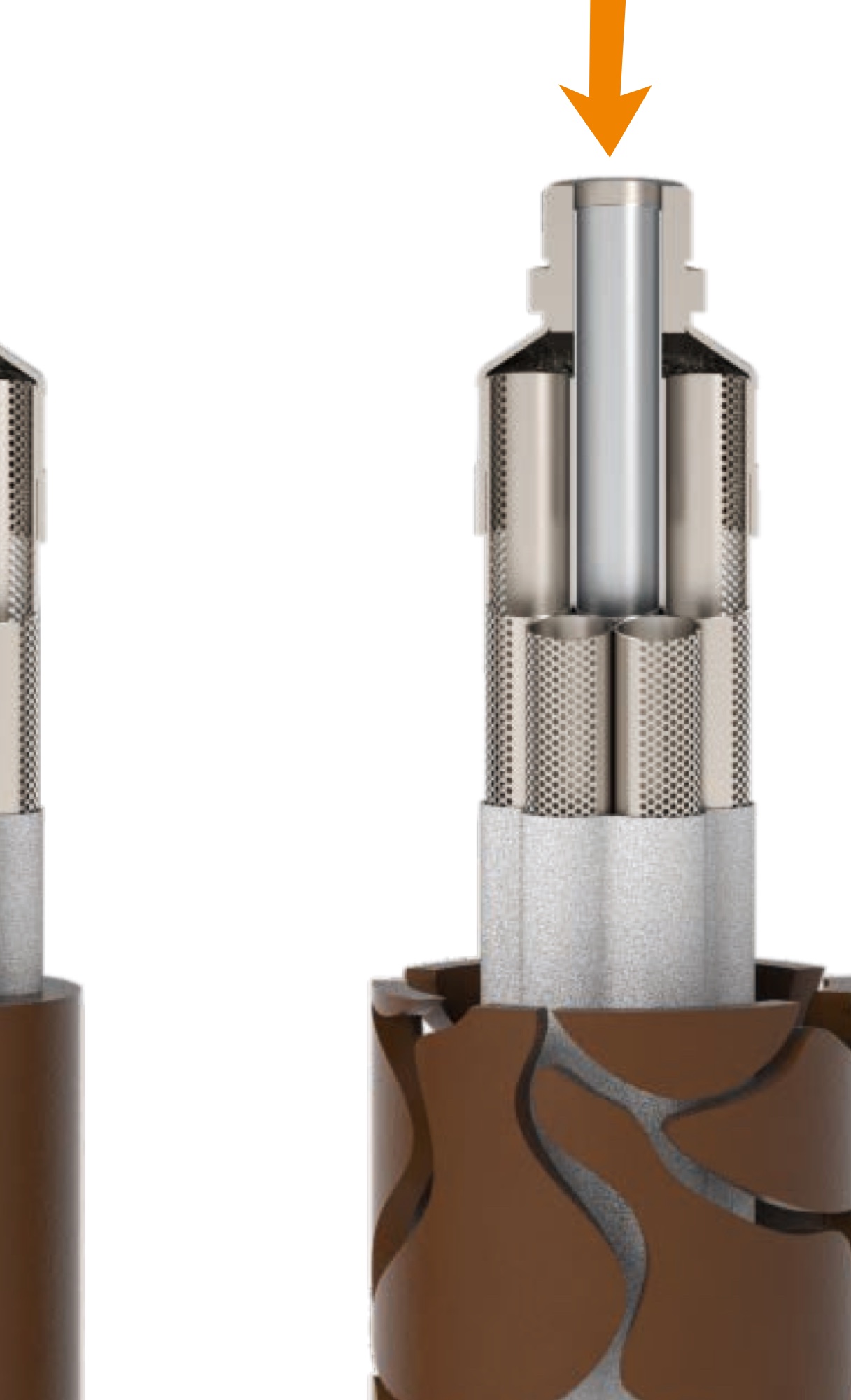
Cloth rests on the perforated profile during filtration and expands during blowback to release cake and restore performance.
Design options
CS · 304 · 316L · 2205 · TA2 · Hastelloy
Rubber · PVDF · PFA · PP · Halar
GB 150 · TSG 21 · ASME · CE · GMP
PLC · DCS · Exd IIB/IIC · Process interlocks
2026 CATALOG SOURCE
Element profile, media, materials, design code and process testing determine the result; the equipment model is an output of that work.
The cloth support contains one closed centre tube and six perforated tubes in a clover profile. During filtration, liquid crosses the cloth and travels through the perforated tubes to the centre collection path. Pressure holds the cloth against the profile, increasing area and stabilising the cake.
During reverse gas flow, the cloth expands toward a round shape. This movement fractures and releases the cake while clearing particles from the cloth structure. The centre path also supports heel recovery to improve product yield.
The catalogue gives a standard solids range of 0.001% to 15% for candle filtration. It is not a standalone selection rule. Surface interception and cake-layer filtration behave differently; rating, flux and cycle length must be selected from particle distribution, viscosity, temperature, corrosion, clarity, cake moisture and production cycle.
| Item | Options |
|---|---|
| Vessel materials | CS, 304, 316L, 2205, TA2, Hastelloy, glass fibre |
| Linings | Rubber, PVDF, PFA, PP, Halar |
| Design codes | GB 150, TSG 21, ASME, CE, GMP |
| Pressure | Catalogue options up to 10 MPa; project confirmation required |
| Heating | Jacket, half-pipe or coil |
| Finish | Polishing, blasting, electropolishing, passivation or coating |
For unknown or critical streams, start with the 0.046 m² laboratory unit and use the approximately 0.8 m² pilot unit to validate flux, cake thickness, moisture and cycle stability.